Extended Range Dulcimers
Note: This is an update to an artice I wrote in the 1990's when my website first appeared on the Internet
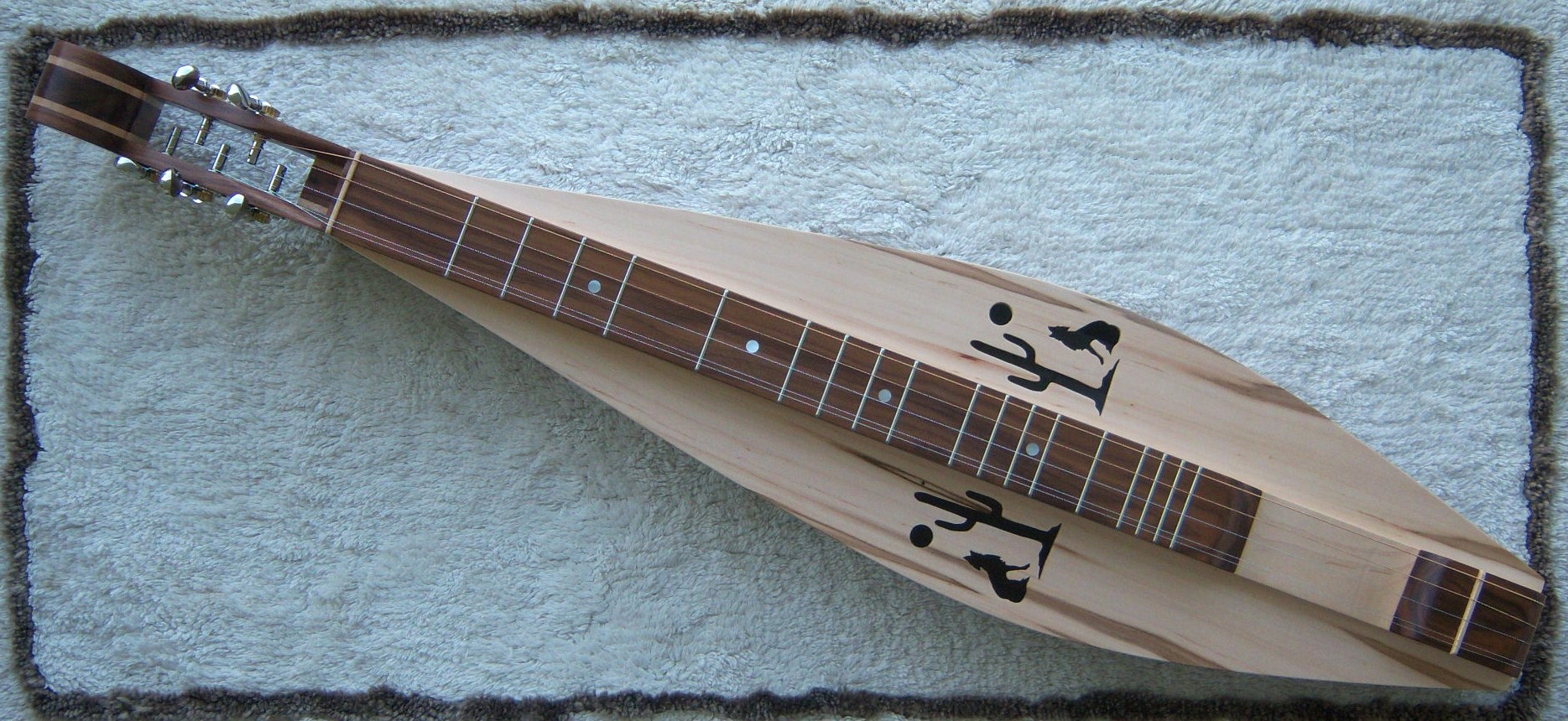
The extended range dulcimer is a concept I came up with around 1994. Although I have never claimed to be the inventor, to the best of my knowledge no one else had built this type of dulcimer before. However, around 2006 or 2008 I posted an extended range dulcimer on Facebook along with an explanation of the concept. Within two months or so I began seeing others introduce their new "hybrids and max" dulcimers. Since then it seems everyone is making some version of combined standard/baritone/bass dulcimer. As for me, I no longer make this dulcimer - read on to find out why.
The
extended range concept is to combine a normal 4-string dulcimer with a 3-string
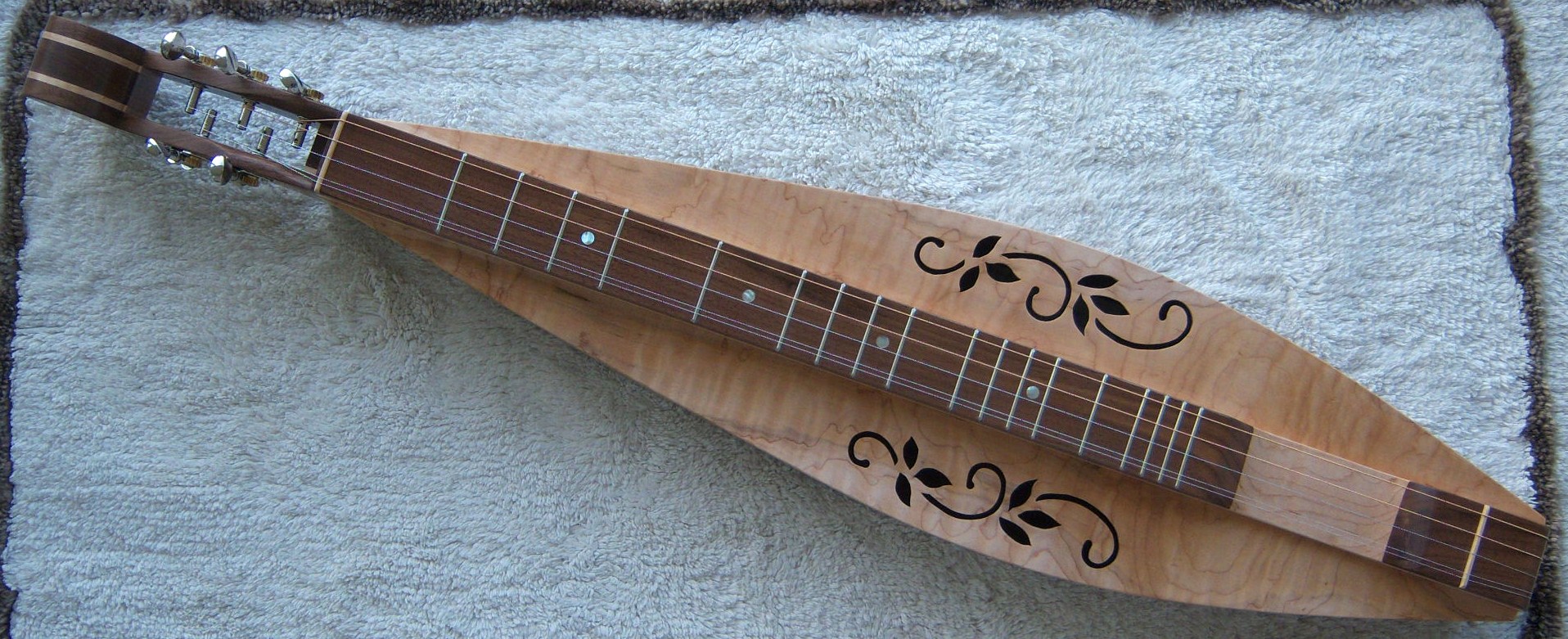
baritone dulcimer. The result is a 5-string dulcimer with a 2" wide fretboard, which could be considered
a standard dulcimer with an extended range on the bass side or a baritone
dulcimer with an extended range on the treble side.
The tuning I used for the extended range is DD A D A. In any case the
addition of the low A has a much fuller sound than a normal dulcimer and allows
for chord inversions not possible on a standard or a baritone dulcimer.
Click Here To Listen to an Extended Range dulcimer
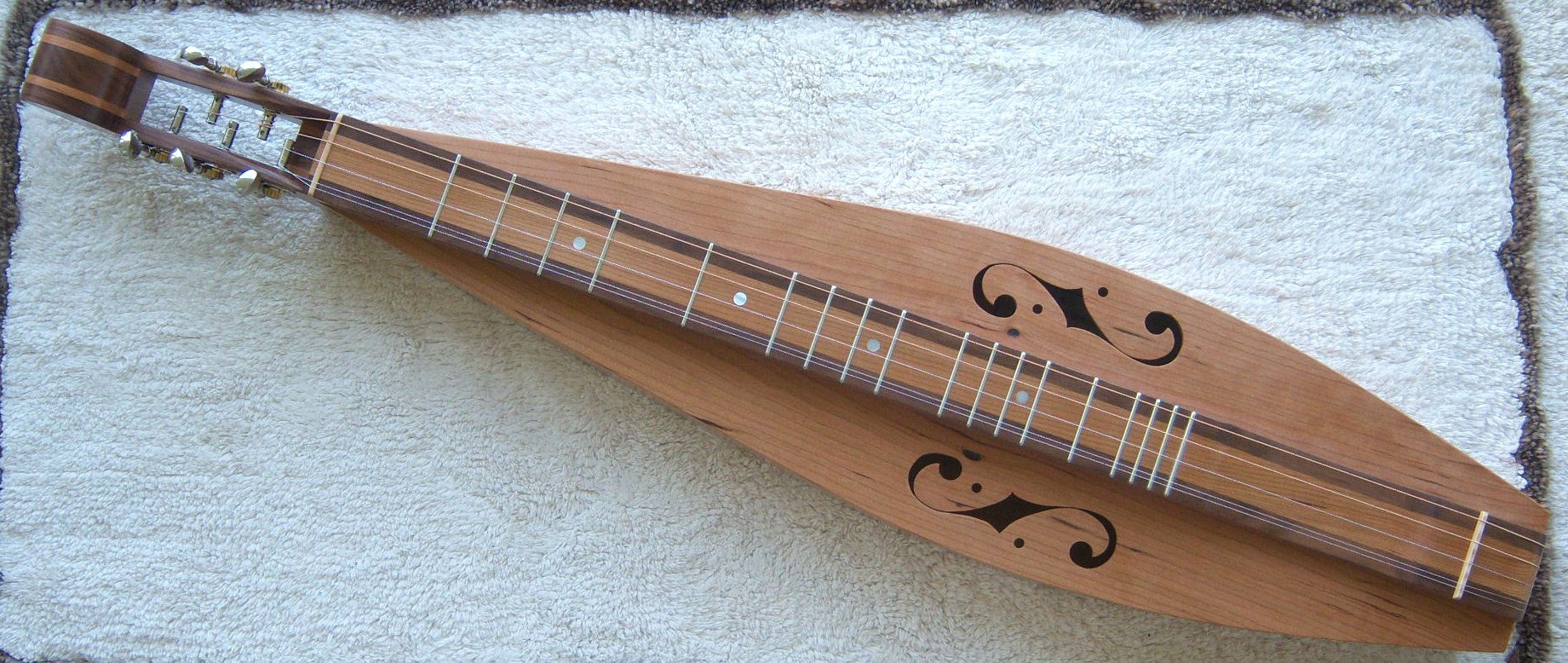
An additional feature of the Extended Range is that it is in essence two dulcimers. Pins can be installed on the side of the fretboard that allow either the low “A” string or the melody strings to be pulled aside. With the bass string pulled aside, the dulcimer would play like a normal dulcimer. With the melody strings pulled aside, the middle string can be tuned up to “E” and the dulcimer played as a normal baritone dulcimer tuned AEA.
A few years ago I stopped offering the extended range range dulcimer as an option. For one thing it is for advanced players and I would never recommend this dulcimer for a beginner. Unlike an instrument with a neck (guitar, mandolin, banjo, etc) it can be tricky to avoid playing certain strings when strumming chords on a dulcimer. So on this dulcimer you have to either mute one of the strings or play full four-finger chord shapes. Very few dulcimer players can play four finger style chords. Therefore the number of people who could realize the full potential of this dulcimer would be limited. Also, there was no instructional material available for this style of dulcimer, so unless you knew the music theory of chord construction it could be a very steep learning curve.
Given the difficulty of playing chords, this dulcimer is certainly better suited for finger picking or cross picking styles. So while the range of the instrument was extended, the "playability" was actually limted for most people. While fingerpickers and crosspickers are common in the dulcimer community, most people still play a version of chord melody style. Although I have nothing against "specialty dulcimers", I perfer to make a dulcimer that anyone from a beginner to an expert can pick up and feel comfortable playing.